


The history of organic fertilizer fermentation tanks is closely related to the treatment of agricultural waste, environmental protection demands, and the development of microbial technology. Its evolution process reflects the transformation from traditional composting to modern and industrialized processing. The following are the key development stages:
---
### **1. Traditional Composting Period (Ancient Times to the Early 20th Century)**
- **Natural Composting**: Humans have been dealing with agricultural waste such as straw and animal manure through open-air composting for thousands of years, relying on natural microbial fermentation. This process was long (lasting from several months to a year), inefficient, and highly dependent on climate conditions.
- **Simple Tools**: Before the 19th century, farmers mainly used tools like shovels and rakes to turn the compost piles to promote aeration, without any specialized equipment.
---
### **2. The Emergence of Mechanized Composting (Early to Mid-20th Century)**
- **Driven by the Industrial Revolution**: With the mechanization of agriculture, early compost turning machines (such as tractor-drawn equipment) emerged, shortening the fermentation period, but outdoor operations remained predominant.
- **Problems Emerge**: Open-air composting was prone to generating odors, attracting flies and mosquitoes, and causing significant nutrient loss, prompting the exploration of enclosed processing methods.
---
### 3. The Birth of Closed Fermentation Tanks (Mid-to-Late 20th Century)
- **Environmental Regulations Driving Development**: After the 1970s, countries such as the United States, Europe, and Japan strengthened environmental legislation, demanding a reduction in agricultural pollution, which spurred the research and development of closed fermentation technologies.
- **Early Fermentation Tanks**:
- **Horizontal Stirred Tanks**: In the 1970s, Germany was the first to introduce horizontal tanks equipped with stirring devices, which controlled temperature and humidity through forced ventilation and stirring.
- **Vertical Tower Fermentation**: Japan developed multi-layer vertical fermentation towers, which utilized gravity for sequential descent, saving space.
- **Technological Breakthroughs**: Automated monitoring systems for temperature, humidity, and oxygen began to be applied, reducing the fermentation cycle to 15-30 days.
---
### **4. Modernization and Intelligence (Since the 1990s)**
- **Application of Efficient Strains**: Introduction of compound microbial agents (such as bacillus and actinomycetes) to accelerate the decomposition of organic matter and enhance fertilizer efficiency.
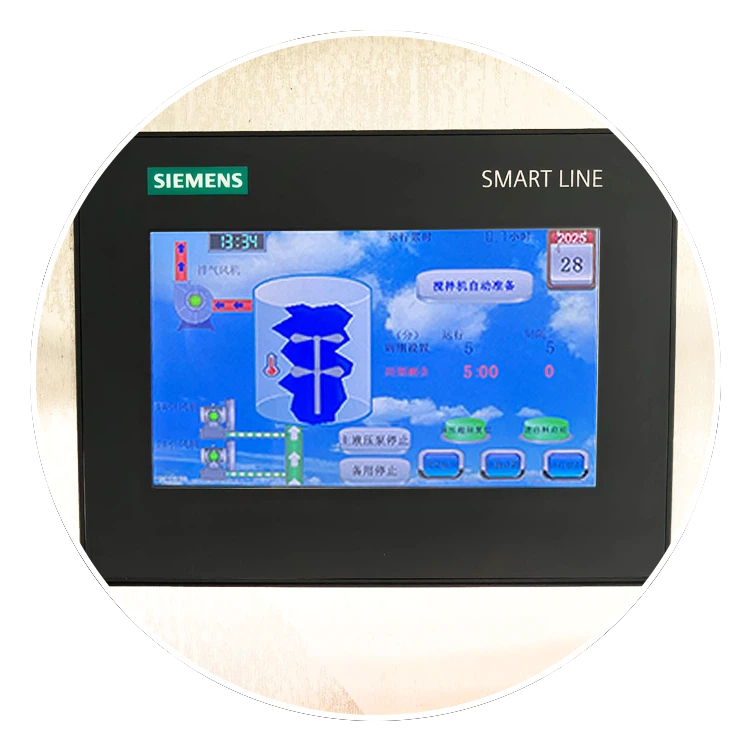
- **Intelligent Control**: - **PLC/Internet of Things**: Real-time monitoring of pH value, temperature, and oxygen content, with automatic adjustment of ventilation and stirring. - **Solar Fermentation Tanks**: Utilization of renewable energy to maintain a constant temperature and reduce energy consumption.
- **Diversified Designs**: - **Continuous Fermentation Tanks**: Continuous input and output of materials to achieve industrial-scale production. - **Anaerobic-Aerobic Combination**: Integration of biogas production (anaerobic) and aerobic fermentation to improve resource utilization.
---
### **5. Current Trends and Challenges**
- **Green Technology**: The promotion of low-energy consumption and zero-emission fermentation processes, such as membrane-covered fermentation technology.
- **Miniaturization and Household Applications**: Small-scale fermentation tanks (1-5 cubic meters) tailored for family farms are gradually becoming popular.
- **Global Disparities**: Developed countries are mainly focused on automation; developing countries are still transitioning through improved traditional composting methods (such as covered static piles).
---
### **Representative Enterprises and Milestones**
- **Germany**: Big Dutchman (chicken and livestock manure treatment equipment in the 1970s).
- **Japan**: Tower fermentation technology (1980s).
- **China**: Introduced and improved after 2000, with enterprises such as Jiangsu Muyang Group launching intelligent fermentation tanks.
---
### **Summary**
The development history of organic fertilizer fermentation tanks is the result of the interweaving of agricultural modernization and environmental protection demands. From open-air composting to intelligent tanks, the core lies in the improvement of efficiency and pollution control. In the future, with the advancement of circular agriculture and the goal of carbon neutrality, fermentation technology will further integrate bioenergy recovery and digital management.
Models
https://www.mingjiaeco.com/compost-machine/municipal-waste-compost-machine.html 对应代码:
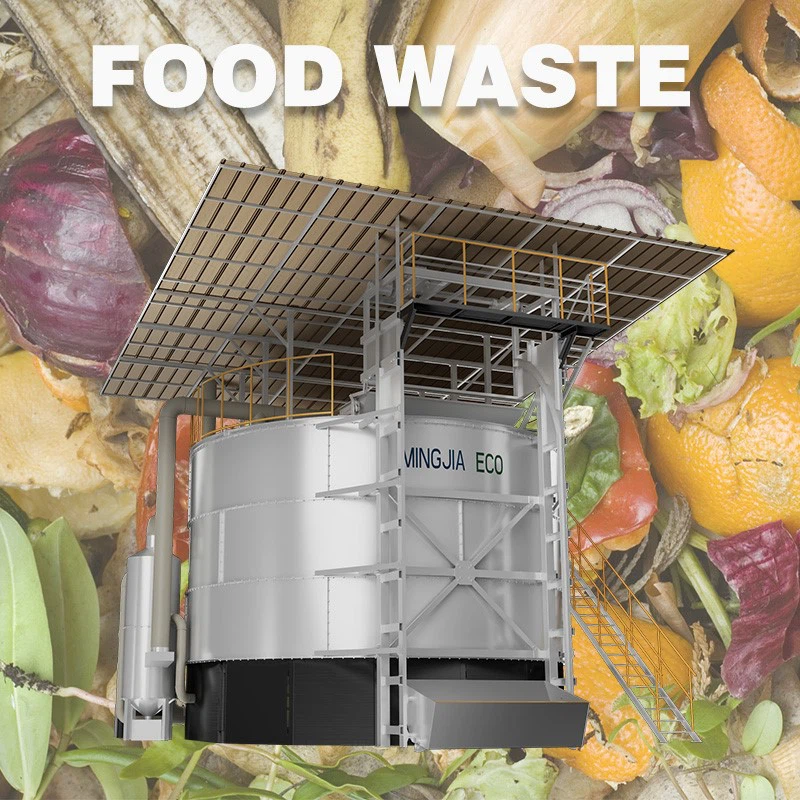
In modern urban life, the generation of municipal waste is a significant challenge. Municipal waste, which encompasses a wide range of materials from food scraps and yard waste to paper and cardboard, poses environmental threats if not managed properly. Mingjia's municipal waste compost machine emerges as a vital solution in the pursuit of sustainable waste management. This innovative equipment is designed to transform the bulk of organic - rich municipal waste into nutrient - rich compost, closing the loop on urban waste and providing a valuable resource for agriculture and horticulture.
Models
| Model | 11FFG-55 | 11FFG-80 | 11FFG-100 | 11FFG-120 | 11FFG-140 | 11FFG-160 | 11FFG-220 | 11FFG-280 |
| Body Volume | 55m³ | 80m³ | 100m³ | 120m³ | 140m³ | 160m³ | 220m³ | 280m³ |
| Power | 29.25kW | 34.25kW | 39.25kW | 39.25kW | 43.75kW | 43.75kW | 84.25kW | 109.6kW |
| Body Material | Double-layer Stainless Steel | |||||||
| handling capacity | ||||||||
| Model | 11FFG-55 | 11FFG-80 | 11FFG-100 | 11FFG-120 | 11FFG-140 | 11FFG-160 | 11FFG-220 | 11FFG-280 |
| Body Volume | 55m³ | 80m³ | 100m³ | 120m³ | 140m³ | 160m³ | 220m³ | 280m³ |
| Power | 29.25kW | 34.25kW | 39.25kW | 39.25kW | 43.75kW | 43.75kW | 84.25kW | 109.6kW |
| Body Material | Double-layer Stainless Steel | |||||||
| handling capacity | 4-6m³ | 4-6m³ | 6-8m³ | 8-10m³ | 10-12m³ | 12-14m³ | 16-19m³ | 20-24m³ |
| Tip:The Moisture Content of Fresh Chicken Manure is 65-70% | ||||||||
Working Principle

Main Tank Body
Cylindrical Design
The core of the manure fermentation tank is its cylindrical - shaped main body, constructed from high - grade stainless steel. The cylindrical form offers several advantages. Firstly, it maximizes the volume - to - surface - area ratio, which is crucial for efficient heat transfer and mass exchange during fermentation. This design also helps to evenly distribute the internal pressure generated by the fermentation process, enhancing the tank's structural stability. The corrosion - resistant property of stainless steel is of utmost importance as waste can be highly corrosive , ensuring the long - term durability of the tank.
Double - walled Structure
Our fermentation tanks feature a double - walled structure. The space between the two walls is filled with insulation materials of polyurethane foam. This insulation layer helps to maintain a stable internal temperature, which is essential for the optimal growth of the aerobic bacteria involved in the fermentation process. It also reduces heat loss to the surrounding environment, making the fermentation process more energy - efficient.

Applications



Certification
Cooperation cases


Features


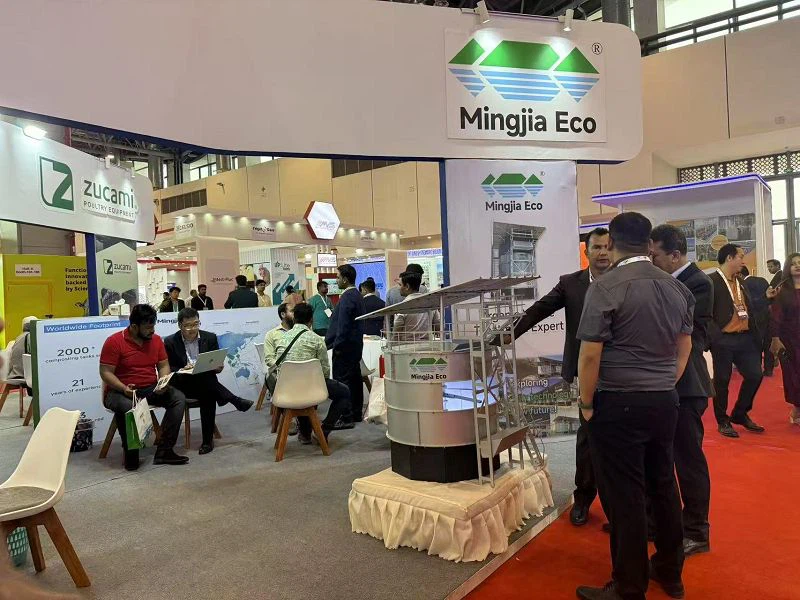
Exhibition

Shipment

4-6m³ 4-6m³ 6-8m³ 8-10m³ 10-12m³ 12-14m³ 16-19m³ 20-24m³ Tip:The Moisture Content of Fresh Chicken Manure is 65-70%
Working Principle
Main Tank Body
Cylindrical Design
The core of the manure fermentation tank is its cylindrical - shaped main body, constructed from high - grade stainless steel. The cylindrical form offers several advantages. Firstly, it maximizes the volume - to - surface - area ratio, which is crucial for efficient heat transfer and mass exchange during fermentation. This design also helps to evenly distribute the internal pressure generated by the fermentation process, enhancing the tank's structural stability. The corrosion - resistant property of stainless steel is of utmost importance as waste can be highly corrosive , ensuring the long - term durability of the tank.
Double - walled Structure
Our fermentation tanks feature a double - walled structure. The space between the two walls is filled with insulation materials of polyurethane foam. This insulation layer helps to maintain a stable internal temperature, which is essential for the optimal growth of the aerobic bacteria involved in the fermentation process. It also reduces heat loss to the surrounding environment, making the fermentation process more energy - efficient.
Applications
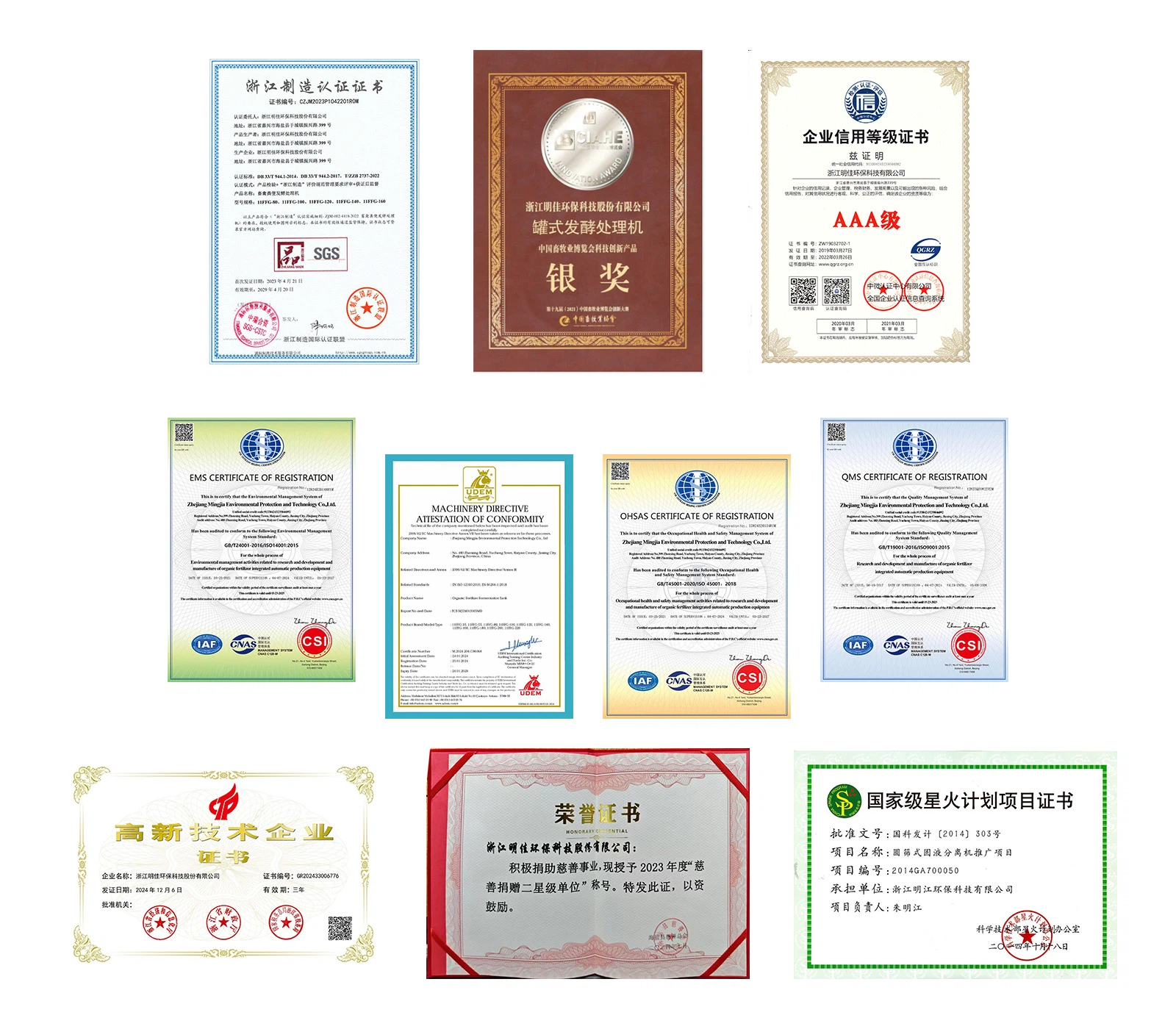
Certification
Cooperation cases
Features
Exhibition
Shipment
chicken manure fermentation tower automatic composting machine
Hot Tags: 2025 hot sale chicken manure fermentation tower automatic composting machine, China 2025 hot sale chicken manure fermentation tower automatic composting machine manufacturers, suppliers, stainless fermentation tank, ferm tank, 20 gallon fermentation tank, unitank for sale, 1 bbl jacketed fermenter, Poultry Farm Composter


